The UW–Whitewater Disability Justice Collective (DJC)
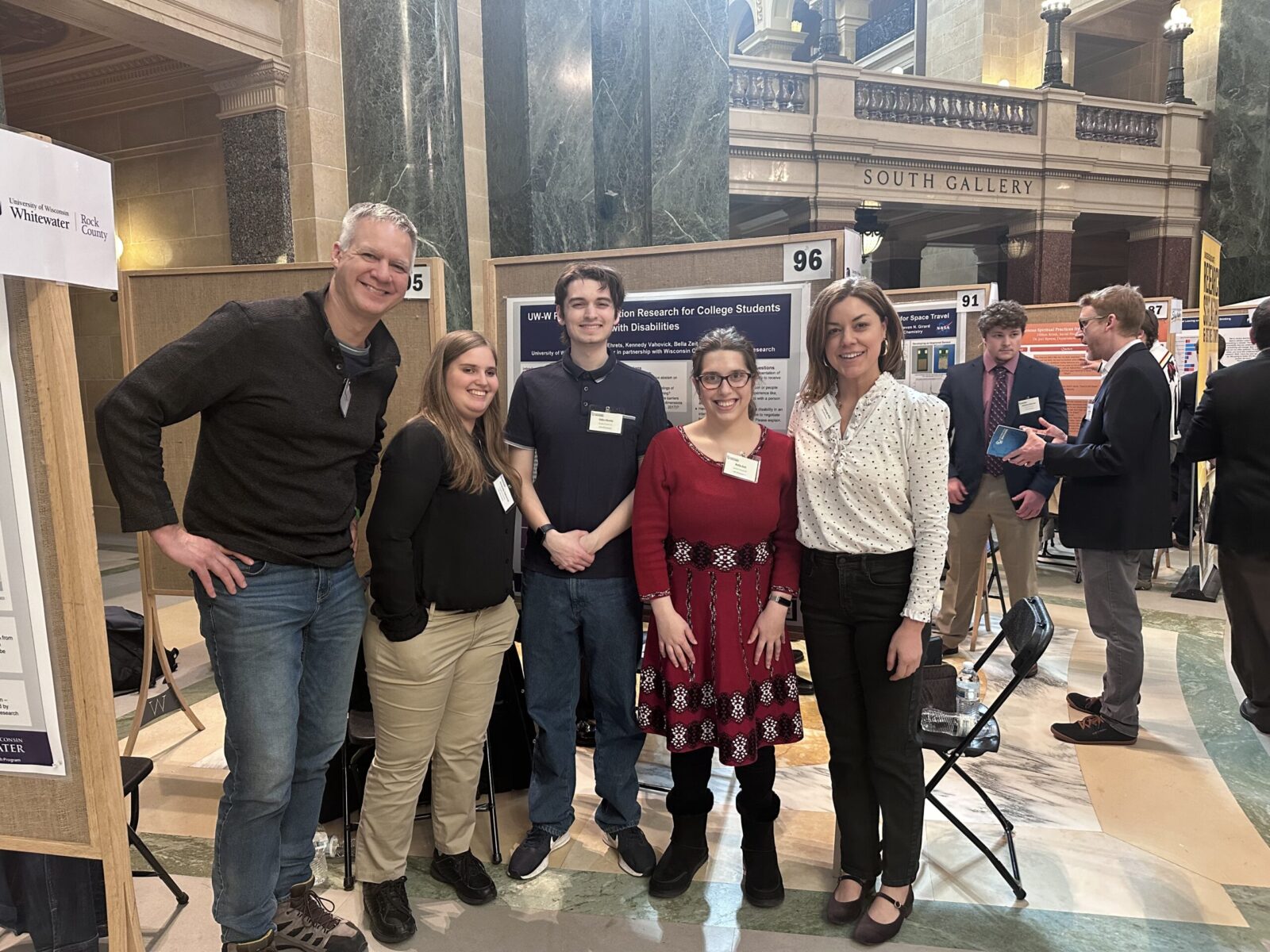
Aimed at improving disability services and supports
In early 2022, three University of Wisconsin–Whitewater undergraduate students (McKenna Meyer, Ashley Peterson, and Maggie Tienor) began an action research collective to improve disability services and supports on their campus by exploring the experiences of college students with disabilities.
Matthew Wolfgram, educational researcher at UW–Madison, and Courtney Wilt, assistant professor of special education at UW–Whitewater, served as mentors supporting the collective’s work, which resulted in an exploratory study of the experiences of college students with disabilities at UWW.
The original cohort presented this work to the UW–Whitewater Chancellor, and in Summer 2023, it led to the formation of the Disability Justice Collective (DJC) — a continuation of the work by a new cohort of students — all of whom identify as disabled/having a disability.
The DJC has since collaboratively developed research questions targeting ableism across key aspects of college life: academic success, belonging, and career planning. Through refining an interview protocol and gathering the perspectives of more peers with disabilities, an ongoing analysis will be incorporated into a pilot survey for universities and their disability service entities to better understand student experiences and disrupt ableism in college life. As more is learned through the DJC about supporting and sustaining collaborative research with students with disabilities, the more we hope to broaden the capacity for universities to meet their ideals of inclusion and student success with actionable strategies.


News Articles
- Bolstering Innovative Engagement: Disability Justice through Participatory Action Research
Morgridge Center for Public Service, Oct. 21, 2025 - Reflections of an Undergraduate Participatory Action Research Group: Exploring Disability Service in College
University of Kansas’ Hawk Hopes Blog
SEPARC is being funded by the racial equity grant from the National Science Foundation (NSF). The opinions, findings, and conclusions or recommendations expressed here are those of the UW–Madison Paj Ntaub research team and do not necessarily reflect the views of the National Science Foundation